If you’re asking how much should a first time homebuyer put down, you’re probably trying to avoid two bad outcomes at once – draining your savings or buying before you’re ready. Around Ashland, Hanover County, Mechanicsville, and the surrounding rural areas, I see buyers get stuck because they assume they need 20% down. Most do not.
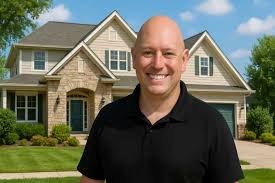
I’m Duane Buziak, NMLS #1110647, a local mortgage broker, and the right down payment is usually the one that gets you into the home comfortably while keeping enough cash for closing, moving, repairs, and a real emergency fund. That number might be 0%, 3%, 3.5%, 5%, or more. It depends on your credit, loan program, monthly payment comfort, and how competitive the home search will be.
Table of Contents
- What a first-time buyer really needs to put down
- Why 20% is not the rule
- How much should a first time homebuyer put down by loan type
- A worked Ashland-area dollar example
- The trade-off between lower down and lower payment
- Broker vs. bank: why product choice matters
- Questions I hear from Hanover buyers
- Closing thought
What a first-time buyer really needs to put down
For most first-time buyers, a practical target is somewhere between 0% and 5% down. That range surprises people, but it reflects how home financing actually works today. USDA and VA can allow 0% down for eligible borrowers. Conventional can start at 3% down. FHA can start at 3.5% down.
The bigger question is not just how much you can put down. It is how much you should put down without creating stress after closing. If putting 10% down leaves you with almost nothing in the bank, that can be riskier than putting 3% down and keeping reserves.
That matters even more for buyers dealing with student loans, uncertain credit scores, or job transitions. It also matters if you’re trying to get a soft credit pull mortgage review before you fully commit. A good mortgage strategy should protect your monthly payment and your cash position at the same time.
Why 20% is not the rule
Twenty percent down does one thing very well – it usually removes monthly mortgage insurance on a conventional loan. But that does not automatically make it the smartest move.
If you are buying your first home in Hanover County, cash is usually tighter than time. You may need money for appraisal gaps, inspections, movers, utility deposits, and the small repairs that seem to show up in the first 60 days. A buyer who puts 20% down and ends up cash-poor is not always in a stronger position than a buyer who puts 3% or 5% down and keeps breathing room.
According to U.S. Census data, the median value of owner-occupied housing units in Hanover County is well above the national norm, which is one reason many local buyers look closely at low-down-payment options instead of forcing a 20% target: https://www.census.gov/quickfacts/hanovercountyvirginia
How much should a first time homebuyer put down by loan type
When buyers ask me how much should a first time homebuyer put down, I usually start with the loan program instead of a fixed percentage.
USDA is the first place I look for many rural-eligible buyers in Hanover County, including parts of Doswell, Montpelier, and Beaverdam. USDA can offer 0% down if the property and household meet eligibility rules. For many first-time buyers, that is the cleanest path to homeownership without blowing up savings.
VA is another strong option for eligible veterans and service members. VA can also allow 0% down, and for the right borrower it can be one of the best combinations of payment flexibility and cash preservation.
Conventional is often a strong fit at 3% to 5% down, especially for buyers with solid credit. If you want more property options or the seller is comparing financing profiles, 5% down can sometimes strengthen your offer without requiring a huge cash commitment.
FHA starts at 3.5% down and can be a good path for buyers with bruised credit, higher debt ratios, or less conventional file strength. It is not always the cheapest long-term route, but it can be the difference between buying now and waiting another year.
If down payment is the main obstacle, there may also be assistance options like Dynamo DPA, Turbo DPA, or Homes for Heroes depending on the scenario. Those are worth reviewing early, especially if you’re trying to line up a mortgage pre approval without hard pull pressure. I also offer NoTouch Credit Pull reviews for buyers who want to look at options before a formal application. NoTouch Credit Pull can help answer whether you are closer than you think.
| Loan Type | Typical Minimum Down | Best Fit For | Main Trade-Off |
|---|---|---|---|
| USDA | 0% | Rural-eligible Hanover buyers with income-qualified households | Location and household eligibility rules apply |
| VA | 0% | Eligible veterans and service members | Must meet VA eligibility and property standards |
| Conventional | 3% | Buyers with stronger credit who want flexibility | Lower down payment can mean higher monthly PMI |
| FHA | 3.5% | Buyers with lower scores or higher debt ratios | Mortgage insurance can last longer |
A worked Ashland-area dollar example
Let’s use a $350,000 purchase price and compare three realistic first-time buyer approaches.
At 3% down on a conventional loan, the down payment is $10,500. Your base loan amount would be $339,500.
At 5% down, the down payment is $17,500. Your base loan amount would be $332,500.
At 20% down, the down payment is $70,000. Your base loan amount would be $280,000.
Now look at the cash difference. Moving from 3% down to 5% down costs an extra $7,000 upfront. Moving from 5% down to 20% down costs another $52,500 upfront.
That is why this decision is so personal. If putting 5% down lowers your payment enough to feel better every month, great. If chasing 20% wipes out your reserves, that extra cash may be more valuable in your savings account than in home equity on day one.
This is also where no-out-of-pocket closing options can matter in the right market setup. They do not erase costs, but they can reduce how much cash you need at the table if the structure fits your rate and long-term plan.
The trade-off between lower down and lower payment
A lower down payment keeps more cash in your pocket, but your monthly payment is usually higher because you are borrowing more. A higher down payment usually lowers the payment, may improve approval strength, and can reduce or eliminate mortgage insurance. Neither path is automatically best.
If your income is steady and your savings are thin, a lower down payment can be smart. If your monthly budget is already tight, a higher down payment may help more than holding extra cash. If your credit score is borderline, program choice may matter more than the exact down payment percentage.
That is why a soft pull mortgage broker review matters before house hunting. Buyers often ask for a no hard inquiry mortgage pre approval because they want real numbers without feeling committed too early. That makes sense. A no credit hit mortgage application conversation can help you compare payments, cash needed, and realistic price range before you start writing offers.
Broker vs. bank: why product choice matters
This is where working with an independent broker is different from walking into one retail bank and getting one shelf of products. Valerie Holbrook at C&F Mortgage, Randy Rodgers at First Bank, The Cowart Team at NFM Lending, and Allison Davis at United Bank may all help buyers every day. Same with national names like Rocket Mortgage or Movement Mortgage in their own models. The key difference is not whether those professionals work hard. It is product access.
As a broker, I can shop 500+ wholesale lenders instead of one product shelf. That matters for first-time buyers balancing score, debt, reserves, USDA eligibility, VA eligibility, and down payment assistance. It also matters if you want a mortgage pre approval without hard pull options early on, or if your file needs flexibility that a single retail outlet may not offer.
For buyers who are skeptical of big bank pricing, that comparison matters. For buyers who worry they are not ready, NoTouch Credit Pull matters too. I use NoTouch Credit Pull because many people need clarity before they need pressure.
Questions I hear from Hanover buyers
FAQ 1: Do I need 20% down to buy in Ashland or Hanover County?
No. Many first-time buyers use 0%, 3%, 3.5%, or 5% down depending on the loan program and their finances.
FAQ 2: What is the best down payment for a USDA buyer near Doswell or Beaverdam?
If the property is eligible and household income fits, USDA can allow 0% down, which is often the best starting point.
FAQ 3: Can I get a no hard inquiry mortgage pre approval before I start touring homes?
Yes, in many cases I can review options using a soft credit pull mortgage approach first, depending on the scenario.
FAQ 4: Is FHA better than conventional for first-time buyers in Mechanicsville?
It depends on credit score, debt, and cash available. FHA can help with tougher files, while conventional may be cheaper long term for stronger borrowers.
FAQ 5: Should I put more down to lower my monthly payment?
Sometimes yes, but not if it leaves you with no reserves. The right answer depends on both payment comfort and post-closing savings.
FAQ 6: Can I buy with student loan debt?
Yes. Student loans do not automatically disqualify you. The key is how they affect debt-to-income ratio and which program fits best.
FAQ 7: What if I am worried my credit score is too low?
You may still have options, including FHA or VA for eligible borrowers. A mortgage pre approval without hard pull review can help identify the best path.
FAQ 8: Are there programs to help with upfront costs in Hanover County?
Yes, depending on the file, options may include Dynamo DPA, Turbo DPA, Homes for Heroes, and no-out-of-pocket closing options.
The best down payment is the one that gets you into the right home without turning the first broken water heater into a financial emergency.
Duane Buziak, Mortgage Maestro | Coast2Coast Mortgage LLC | NMLS #1110647 | (804) 212-8663 | duane@coast2coastml.com | 3302 Haydenpark Lane, Henrico VA 23233 | Licensed: VA, FL, TN, GA, DC Not a commitment to lend. Rates subject to change. Equal Housing Lender. Coast2Coast Mortgage LLC NMLS #376205. Duane Buziak NMLS #1110647.
Legal disclaimer: This article is for general educational purposes and is not mortgage, legal, tax, or financial advice. Loan approval depends on borrower qualifications, credit, income, assets, occupancy, appraisal, and program guidelines. Coast2Coast Mortgage LLC NMLS #376205. Duane Buziak NMLS #1110647. Licensed in VA, FL, TN, GA, DC.