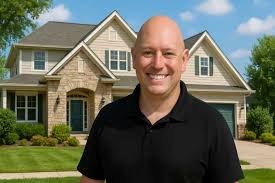
A lot of first-time buyers around Ashland ask the same question before they even think about house hunting: do first time homebuyers need a down payment? The short answer is no, not always. Some buyers do need one, some can buy with very little down, and some can qualify for 100% financing. The real issue is not just whether a down payment is required. It is which loan program fits your credit, income, debt, and the property you want.
By Duane Buziak, Mortgage Maestro, broker, NMLS #1110647
Table of Contents
- What the real answer is
- Which loan programs require money down
- A worked example with real numbers
- Why down payment is only part of the cash question
- Broker vs. bank: why options matter
- Program comparison table
- FAQs for Ashland and Hanover buyers
What the real answer is
First-time buyers do not automatically need a down payment. In Hanover County, that can be especially good news because some rural-eligible areas may qualify for USDA financing with 0% down, and eligible veterans may use VA financing with 0% down as well. FHA usually requires 3.5% down. Conventional loans can go as low as 3% down for qualified first-time buyers.
That means the answer is not one-size-fits-all. If you have limited savings but solid income, one path may work. If your credit score is lower, a different path may make more sense. If you are worried about your score before applying, I can often start with a soft credit pull mortgage review using NoTouch Credit Pull so you can see where you stand without jumping straight into a full hard inquiry.
For local context, Hanover County remains a strong owner-occupied market. The U.S. Census Bureau reports a high homeownership rate in the county, which helps explain why many buyers are trying to find a way in without waiting years to save 20%. https://www.census.gov/quickfacts/hanovercountyvirginia
Which loan programs require money down
USDA is the first program I look at for buyers targeting eligible rural parts of Hanover County, including areas outside the more densely developed pockets. USDA allows 100% financing, so no down payment is required. You still need to qualify based on income, debt, property eligibility, and program limits, but for the right buyer, this can be the cleanest path to ownership.
VA is another 0% down option. If you are an eligible veteran or active-duty service member, you may be able to buy with no down payment and flexible credit standards. For many military households, this is the strongest loan option available.
FHA usually requires 3.5% down. This can be a smart fit for buyers with higher debt ratios, shorter credit history, or scores that do not line up well with conventional pricing. Conventional often starts at 3% down for first-time buyers, but the stronger your credit profile, the better that option tends to look.
Down payment assistance can also change the equation. Programs such as Dynamo DPA or Turbo DPA may help bridge the gap for qualified buyers who have the income to support a payment but have not built up much cash yet. Homes for Heroes may also create savings for certain community-serving professions.
A worked example with real numbers
Let us use a realistic example for a first-time buyer looking at a $325,000 home near Ashland.
With USDA at 0% down, the base loan amount starts at $325,000. If that buyer instead used FHA with 3.5% down, the down payment would be $11,375. On a conventional 3% down loan, the down payment would be $9,750.
Here is why that difference matters in real life. Suppose the buyer has $12,000 saved. Under FHA, almost the entire savings balance could be tied up in the down payment before factoring in prepaid items and closing expenses, unless we structure no-out-of-pocket closing options where the scenario allows. Under USDA, that same buyer may keep much more of that cash cushion for moving, repairs, appliances, or reserves.
Now let us compare the monthly impact in a simplified way. If a buyer puts 3% down on $325,000, the loan amount is about $315,250. If the same buyer uses 0% down, the loan amount is $325,000 before any financed guarantee or funding costs that may apply by program. The payment on the 0% down option may be higher because the loan amount is higher, but it could still be the smarter move if keeping cash in the bank prevents stress after closing.
That is the trade-off buyers need to understand. A bigger down payment can lower the monthly payment, but using every dollar to get into the house is not always wise.
Why down payment is only part of the cash question
A lot of buyers focus on the down payment and miss the other cash pieces. Prepaids, escrows, appraisal, inspection, and other closing expenses can matter just as much. That is why I talk through total cash-to-close, not just down payment.
In some cases, we can build a structure with seller help, pricing strategy, or no-out-of-pocket closing options so the buyer brings little to nothing out of pocket at closing beyond what the program requires. Not every contract or market condition supports that, but it is a real strategy, especially when you work with a broker who can compare more than one product shelf.
If you are nervous about applying because you do not want your credit dinged before you know the numbers, I can review options with a no hard inquiry mortgage pre approval path in many cases. A mortgage pre approval without hard pull is not the right fit for every file, but it can be a great first step when buyers want clarity before they fully commit. I also offer a no credit hit mortgage application path for early-stage conversations when appropriate, and that matters to buyers who are still sorting out score questions or student loans.
Broker vs. bank: why options matter
This is where the difference between a local independent broker and a retail bank matters. A retail loan officer at one institution may only have that company’s rates, overlays, and product set. That includes respected local names like Valerie Holbrook at C&F Mortgage, Randy Rodgers at First Bank, The Cowart Team at NFM Lending, and Allison Davis at United Bank, plus national players like Rocket Mortgage and Movement Mortgage. Nothing wrong with comparing. You should compare.
But comparison only helps if the person across from you can shop broadly. I am a broker with access to 500+ wholesale lenders, not one shelf. That matters when a buyer is trying to solve for low down payment, flexible credit, debt ratio, or no-out-of-pocket closing options at the same time. It also matters for speed and accuracy. My Dare to Compare approach is simple: stack the options side by side and let the numbers talk.
NoTouch Credit Pull also helps at the front end. When a buyer is unsure whether they qualify for USDA, VA, FHA, or conventional, a soft pull mortgage broker review can give useful direction before they take a harder step.
Do first time homebuyers need a down payment in Ashland?
In Ashland and greater Hanover, plenty of first-time buyers do not need a down payment if they fit USDA or VA. Others may need 3% or 3.5%. Very few truly need 20% down, even though that myth still hangs around.
What you do need is a realistic plan. That plan should answer five questions: how much house payment is comfortable, how much cash can stay in reserve, what credit profile you have today, whether the property fits the program, and whether your best deal comes from one institution or a broker who can shop many.
Program comparison table
| Program | Typical Minimum Down Payment | Best Fit | Key Trade-Off |
|---|---|---|---|
| USDA | 0% | Buyers in eligible rural areas of Hanover County with income within program limits | Property location and household income rules apply |
| VA | 0% | Eligible veterans and active-duty buyers | Funding fee may apply unless exempt |
| FHA | 3.5% | Buyers with lower scores or higher debt ratios | Mortgage insurance is typically less flexible long term |
| Conventional | 3% | First-time buyers with stronger credit profiles | Pricing can get tougher with lower scores or small down payments |
FAQs for Ashland and Hanover buyers
1. Do first time homebuyers need a down payment in Ashland, VA?
Not always. USDA and VA can offer 0% down for qualified buyers, while FHA and conventional usually require some down payment.
2. Is Hanover County eligible for USDA home loans?
Parts of Hanover County may qualify, especially outside denser suburban zones. Eligibility depends on the exact property address.
3. Can I buy with bad credit and no down payment?
Possibly. VA may allow lower scores, and USDA can work for some borrowers too. It depends on the full file, not just one score.
4. Do I need 20% down to avoid problems getting approved?
No. Twenty percent is not the standard for most first-time buyers. Many successful buyers use 0%, 3%, or 3.5% down.
5. Can I get a no hard inquiry mortgage pre approval?
In many early-stage cases, yes. A no hard inquiry mortgage pre approval can help you explore options before a full application.
6. What if I am worried my score will drop from applying?
A mortgage pre approval without hard pull may be available depending on your situation. That is one reason buyers ask for a soft pull mortgage broker review first.
7. Are closing costs separate from the down payment?
Yes. They are different costs, although no-out-of-pocket closing options may help reduce what you bring in some scenarios.
8. What is the best first step for a Hanover first-time buyer?
Start with numbers, not listings. Review payment, cash-to-close, and credit options first so you shop with confidence.
Buying your first home is less about chasing a magic down payment number and more about picking the right structure before you make an offer. If you want straight answers, the next best move is to run the math early, keep your options open, and make sure the loan fits your life after closing, not just the day you get the keys.
Legal Disclaimer: This article is for general educational purposes only and is not a commitment to lend. Loan approval depends on credit, income, assets, occupancy, appraisal, and program guidelines. Coast2Coast Mortgage LLC, NMLS #376205. Duane Buziak, NMLS #1110647. Licensed in VA, FL, TN, GA, DC.
Duane Buziak, Mortgage Maestro | Coast2Coast Mortgage LLC | NMLS #1110647 | (804) 212-8663 | duane@coast2coastml.com | 3302 Haydenpark Lane, Henrico VA 23233 | Licensed: VA, FL, TN, GA, DC Not a commitment to lend. Rates subject to change. Equal Housing Lender. Coast2Coast Mortgage LLC NMLS #376205. Duane Buziak NMLS #1110647.
2 Responses