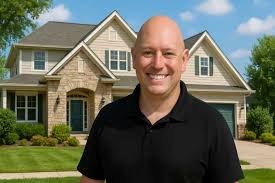
Updated September 2026 — licensing details, loan limits, and program information current as of this publication.
A question lands in Duane Buziak’s inbox more often than you might expect: “I’m not in Ashland — can you still help me?” The short answer is yes, absolutely. The longer answer is worth understanding, because the confusion is completely reasonable. AshlandMortgage.com is named after a town. It’s natural to assume the service stops at the Hanover County line.
It doesn’t. AshlandMortgage.com is the digital home base for Duane Buziak, NMLS #1110647, operating under Coast2Coast Mortgage LLC, NMLS #376205, and licensed across Virginia, Florida, Tennessee, Georgia, and Washington DC. The brand is proudly rooted in Ashland, VA — a walkable, historic rail town just 15 miles north of Richmond where the train whistle still echoes through downtown and the main street feels like it hasn’t forgotten what community actually means. The service area, however, stretches well beyond Hanover County. All lending activity is conducted under Virginia license and complies with applicable state law in each licensed jurisdiction.
One thing that doesn’t change regardless of which licensed state you’re buying in: the NoTouch Credit Pull. Before you talk to a single real estate agent or submit any application, the NoTouch Credit Pull soft pull pre-approval gives you a genuine qualification picture using a soft inquiry only — so your credit score is never impacted, not even by a single point. That credit score protection is available to borrowers in all five licensed states, and it costs nothing to use. The no hard inquiry pre-approval process is a structural departure from what you’ll encounter at most retail banks and national direct lenders, where a formal pre-approval application triggers a hard pull immediately. And the soft credit check mortgage pre-qualification at AshlandMortgage.com is just as useful whether you’re buying in Mechanicsville, Tampa, or Nashville — because the goal is the same: give you real numbers before you make any commitment.
This article exists to clear up the geographic confusion and give you something more useful than a simple “yes, we serve your state.” What follows are seven concrete strategies for finding, vetting, and working with the right mortgage professional wherever you’re buying or refinancing — anchored to the 2026 FHFA conforming loan limit of $806,500 baseline / $1,249,125 high-cost, as established by the FHFA’s 2026 conforming loan limit announcement. These limits apply uniformly across all five licensed states and replaced the superseded 2025 limits as of January 2026. Whether you’re a first-time homebuyer in Mechanicsville, a DSCR investor in Florida, or a VA-eligible buyer in Tennessee, the same broker-first philosophy and the same NoTouch Credit Pull protection apply.
Understanding how multi-state licensing actually works, how the NoTouch Credit Pull protects your credit score during the shopping process, and why an independent broker’s 500+ wholesale lender network benefits you regardless of your ZIP code — that’s the foundation. Let’s build on it.
Duane Buziak, NMLS #1110647 | Coast2Coast Mortgage LLC, NMLS #376205 | Licensed in VA | 804-212-8663 | Equal Housing Lender. This content is for informational purposes only and does not constitute a commitment to lend. Loan programs, rates, and terms are subject to change without notice and are not available to all borrowers. All loans subject to underwriting approval.
1. Understand How Mortgage Broker Licensing Actually Works Across State Lines
The Challenge It Solves
Most borrowers assume a mortgage broker’s physical office location determines where they can do business. This misunderstanding causes people in Florida, Tennessee, Georgia, and DC to scroll right past a broker who could genuinely serve them well — simply because the brand name includes a Virginia town. The NMLS multi-state licensing system works very differently from what most people expect.
The Strategy Explained
The Nationwide Multistate Licensing System (NMLS) is the regulatory framework that governs mortgage originator licensing across the country. A broker’s brand name or website URL has nothing to do with where they’re legally authorized to originate loans. What matters is which state licenses are held by the individual originator and the company entity.
In this case, the relevant entity is Coast2Coast Mortgage LLC, NMLS #376205. The company holds active licenses covering Virginia, Florida, Tennessee, Georgia, and Washington DC. Duane Buziak, NMLS #1110647, originates loans under that umbrella. The brand name “AshlandMortgage.com” reflects where Duane is based and where his community roots run deepest — it is not a geographic restriction on service.
Think of it like a law firm named after the founding partner’s hometown. The name tells you where they’re from. It doesn’t tell you which courts they’re admitted to practice in. For a deeper look at how this broker model works in practice, the full story behind AshlandMortgage.com covers the structure and philosophy in detail.
Implementation Steps
1. Visit the NMLS Consumer Access portal and search for any mortgage professional by name or NMLS number before you engage them.
2. Confirm the individual’s NMLS number (Duane Buziak: #1110647) and the company NMLS number (Coast2Coast Mortgage LLC: #376205) appear together with active status.
3. Check the “Approved States” section on the NMLS profile to verify that the originator holds an active license in the state where your property is located — not just their home state.
Pro Tips
Always verify licensing yourself, even if a broker tells you they’re licensed in your state. The NMLS Consumer Access lookup takes under two minutes and is completely free. If a profile shows a license as “approved” in your state, you’re dealing with someone who has met that state’s regulatory requirements. If it shows “pending” or nothing at all, ask for clarification before sharing any personal financial information.
2. Use the NoTouch Credit Pull to Shop Safely Before You Commit to Any Lender
The Challenge It Solves
One of the biggest fears borrowers carry into the mortgage shopping process is this: “What if I apply with multiple lenders and they all pull my credit? Won’t that tank my score?” It’s a legitimate concern, and it keeps many buyers from doing the comparison shopping that would actually save them money. The NoTouch Credit Pull exists specifically to remove that barrier.
The Strategy Explained
Ashland Mortgage’s NoTouch Credit Pull is a soft credit inquiry pre-approval process. A soft pull retrieves your credit profile for review purposes without triggering the hard inquiry that affects your credit score. You get a real, substantive picture of your borrowing position — credit profile, estimated loan amounts, program eligibility — without any score impact. The complete guide to no credit check mortgage pre-qualification walks through exactly how this process works step by step.
This is meaningfully different from what you’ll encounter at most retail banks and many national direct lenders, where a pre-approval application triggers a hard inquiry immediately. At First Bank, for example, the standard pre-qualification process follows conventional bank procedures. At large national platforms, a formal pre-approval typically requires a hard pull as part of their automated underwriting workflow. The NoTouch approach lets you gather real information first and decide whether to move forward — on your terms.
This matters just as much in Florida or Tennessee as it does in Hanover County. The soft pull technology isn’t geographically limited. Any borrower in the five licensed states can use it.
Implementation Steps
1. Visit AshlandMortgage.com and initiate the NoTouch Credit pre-approval before contacting any other lender or submitting any formal application.
2. Use the results to understand your estimated loan range, which programs you likely qualify for, and what your debt-to-income ratio looks like — all without a hard inquiry on file.
3. Bring that information into your home search conversations with your real estate agent so you’re shopping in a realistic price range from day one.
Pro Tips
The NoTouch Credit Pull isn’t just a marketing tool — it’s a decision-making tool. Use it before you talk to any other lender. That way, you enter every subsequent conversation knowing your numbers, which prevents lenders from steering you toward programs that benefit them rather than you. Knowledge is leverage in a mortgage negotiation.
3. Match Your Loan Program to Your State and Property Type — Not Just Your Zip Code
The Challenge It Solves
Borrowers often assume that loan programs work differently depending on which state they’re buying in. They wonder whether FHA is “harder” in Florida, or whether USDA is “better” in Virginia. The reality is simpler and more empowering: federal loan programs operate under uniform national guidelines. Your state doesn’t change the program rules. Your property type and your personal eligibility do.
The Strategy Explained
FHA, VA, USDA, and conventional loans are governed by federal agencies and government-sponsored enterprises — HUD for FHA, the VA for VA loans, USDA Rural Development for USDA, and FHFA for conforming conventional limits. The state you’re buying in doesn’t change the core underwriting guidelines. A 3.5% FHA down payment is 3.5% whether the property is in Mechanicsville, VA or Memphis, TN.
What does vary by state and county is property eligibility for USDA (rural designation maps are county-specific), VA funding fee exemptions tied to disability status, and local property tax structures that affect your monthly payment calculation. Program selection matters far more than geography for most borrowers. Understanding your debt-to-income ratio before selecting a program is equally critical — it determines which options are realistically available to you.
Here’s a worked dollar example that makes this concrete. Scenario: $350,000 purchase price, credit score 620+, first-time buyer.
USDA (property-eligible area): $0 down payment. USDA upfront guarantee fee of approximately 1% = $3,500, typically financed into the loan. Total out-of-pocket at closing for down payment: $0.
FHA (3.5% down): $12,250 down payment out of pocket. FHA Upfront Mortgage Insurance Premium (UFMIP) of 1.75% = $6,125, typically financed into the loan. Total out-of-pocket for down payment: $12,250.
Conventional 5% down: $17,500 down payment. No government guarantee fee, but PMI applies until 20% equity is reached.
Conventional 20% down: $70,000 down payment. No PMI. Full equity position from day one.
The difference between USDA and conventional 20% down on a $350,000 purchase is $70,000 out of pocket. Program selection isn’t a technicality — it’s a financial strategy.
For 2026, the FHFA conforming loan limit is $806,500 for baseline counties and $1,249,125 for designated high-cost areas. These limits apply uniformly across all states where Coast2Coast Mortgage LLC is licensed.
Implementation Steps
1. Identify your personal eligibility first: Are you a veteran or active-duty service member (VA)? Is your target property in a USDA-eligible rural or suburban area? These two questions can unlock $0-down options before you ever look at FHA or conventional.
2. Check the USDA eligibility map for your specific property address — not just the general area. Eligibility is determined parcel by parcel in some markets.
3. Run the down payment math for each program you qualify for using the framework above, then compare total cash needed at closing against your available savings.
Pro Tips
Virginia buyers in Hanover County should know that parts of the county — including pockets near Ashland — have historically carried USDA rural eligibility. Eligibility maps are updated periodically, so always verify current status at the USDA tool page rather than relying on information from a previous home search.
4. Leverage a Broker’s 500+ Lender Network Instead of Settling for One Bank’s Rate Sheet
The Challenge It Solves
When you walk into a bank or call a national direct lender, you’re shopping from a single menu. That institution has one set of rate sheets, one set of overlays on top of federal guidelines, and one profit margin baked into every quote. You have no visibility into whether a different lender would give you a materially better deal. A wholesale mortgage broker operates from an entirely different structural position.
The Strategy Explained
As an independent mortgage broker operating under Coast2Coast Mortgage LLC, Duane Buziak has access to more than 500 wholesale lenders. These are institutional lenders who don’t sell directly to consumers — they fund loans through broker channels at wholesale pricing. The broker’s job is to find the best combination of rate, fees, and program fit from that pool for each specific borrower situation. This same multi-lender access is what makes it possible to lock the best mortgage refinance rates rather than simply accepting whatever a single institution offers.
This is the structural advantage that retail banks and direct lenders simply cannot replicate. Randy Rodgers at First Bank in Ashland is a respected local banker — but he has access to First Bank’s products only. Valerie Holbrook at C&F Mortgage operates as a retail lender, which means she works within C&F’s specific product set and pricing. Rocket Mortgage and Movement Mortgage are large direct lenders with broad product offerings but single-institution pricing and no wholesale access.
The comparison below illustrates these structural differences clearly.
| Mortgage Professional | Lender/Product Access | Soft Pull Pre-Approval | Multi-State Licensed | USDA/VA Specialty |
|---|---|---|---|---|
| Duane Buziak / Coast2Coast (Broker) | 500+ wholesale lenders | Yes — NoTouch Credit Pull | VA, FL, TN, GA, DC | Yes — both programs |
| Valerie Holbrook / C&F Mortgage | C&F Mortgage retail products | Standard retail process | VA-focused retail corridor | Available, retail pricing |
| Randy Rodgers / First Bank | First Bank products only | Standard bank process | Local bank footprint | Available, bank pricing |
| Rocket Mortgage | Rocket’s own product set | Hard pull at application | Nationwide direct lender | Available, national platform |
| Movement Mortgage | Movement’s own product set | Standard application process | Nationwide direct lender | Available, national platform |
Implementation Steps
1. Before choosing a mortgage professional, ask directly: “How many wholesale lenders do you have access to?” A broker should be able to answer this question immediately. A retail banker will explain they work within their institution’s products — that’s a factual distinction, not a criticism.
2. Ask whether the professional can shop your specific scenario — your credit profile, loan amount, and property type — across multiple lenders simultaneously. A broker can. A bank cannot.
3. Request a Loan Estimate from at least two sources before committing. If one source is a broker with wholesale access and another is a retail institution, the pricing comparison will be instructive.
Pro Tips
Wholesale pricing isn’t always dramatically lower than retail — but it frequently is, and even a modest rate difference compounds significantly over a 30-year loan. On a $350,000 loan, a 0.25% rate difference translates to a meaningful monthly payment gap and a substantial difference in total interest paid over the life of the loan. The broker model exists specifically to create that competitive pressure on your behalf.
5. Identify Whether USDA or VA Eligibility Opens Zero-Down Options in Your Target Area
The Challenge It Solves
Many borrowers spend months saving for a down payment without realizing they may already qualify for a zero-down loan program. USDA and VA loans are the two most powerful no-down-payment options available in the U.S. mortgage market, and both are available in all five states where Coast2Coast Mortgage LLC is licensed. The eligibility check takes minutes. The savings can be tens of thousands of dollars.
The Strategy Explained
VA eligibility is borrower-based. If you are an eligible veteran, active-duty service member, or qualifying surviving spouse, your VA entitlement follows you regardless of where in the country you’re buying. VA home loan benefits include no down payment, no private mortgage insurance, and a 100% LTV cash-out refinance option. There are no geographic restrictions within the United States — a VA-eligible buyer purchasing in Nashville has the same program access as one buying in Mechanicsville. For Hanover County buyers specifically, the VA loans available in Ashland County page covers local program details and eligibility requirements.
USDA eligibility works differently. It’s property-based, not borrower-based. The USDA Rural Development eligibility map designates which properties qualify based on population density and rural character. The program is available across all five licensed states — rural and suburban areas of Virginia, Florida, Tennessee, Georgia, and DC-adjacent Maryland communities. Notably, parts of Hanover County, including pockets near Ashland’s ZIP code 23005, have historically carried USDA eligibility. Confirm current status at the USDA tool page before assuming eligibility, as maps are updated periodically.
For Virginia buyers specifically, down payment assistance programs through the Virginia Housing Development Authority can layer on top of FHA financing for eligible first-time buyers in Hanover County, potentially reducing out-of-pocket costs further even when USDA isn’t available for a specific property.
Implementation Steps
1. Check VA eligibility first if you have any military service history. Visit VA.gov home loans and request your Certificate of Eligibility (COE), or let your broker pull it through the automated system during pre-approval.
2. Enter your specific target property address — not just the city or ZIP code — into the USDA eligibility map. Eligibility can vary street by street in transitional suburban markets.
3. If neither VA nor USDA applies, ask your broker about down payment assistance programs in your specific state and county before defaulting to a conventional or FHA down payment.
Pro Tips
USDA and VA are the top loan differentiators in the Ashland and Hanover County market — and they’re equally powerful for buyers in the other four licensed states. Don’t assume you don’t qualify for either program without actually checking. Many borrowers who could have used a zero-down program instead made a $12,000-plus down payment simply because no one walked them through the eligibility check early enough in the process.
6. Vet Any Mortgage Professional Using These Five Verifiable Criteria
The Challenge It Solves
The mortgage industry has no shortage of professionals who present themselves as experts. Borrowers often choose based on a referral, a website, or a social media presence — none of which tell you whether the person is actually qualified to handle your specific loan in your specific state with your specific program needs. Here is a five-point vetting checklist that takes the guesswork out of the decision.
The Strategy Explained
This checklist applies whether you’re evaluating Duane Buziak or any other mortgage professional. Consumer protection is the goal, and all five criteria are verifiable through public sources.
Criterion 1 — NMLS License Verification: Every licensed mortgage originator in the country has an NMLS number. Search that number at NMLS Consumer Access and confirm the license is active, not expired or suspended. This takes two minutes and is non-negotiable.
Criterion 2 — State Licensing Match: Confirm the originator holds an active license in the state where your subject property is located. An NMLS profile will list all approved states. If your property is in Tennessee and the originator’s license only covers Virginia, they cannot legally originate your loan — regardless of what they tell you.
Criterion 3 — Soft Pull Pre-Approval Availability: Ask directly: “Can you run a pre-approval without a hard credit inquiry?” If the answer is no, you’re being asked to take a credit score risk before you’ve even decided to work with this person. That’s an unnecessary risk. The NoTouch Credit Pull at AshlandMortgage.com is a concrete example of what best practice looks like.
Criterion 4 — Wholesale Lender Access Count: Ask how many lenders they can submit your loan to. A broker with 500+ wholesale lenders is in a structurally different position than a banker with one institution’s rate sheet. Neither is inherently wrong — but you should know which type of professional you’re working with before you commit.
Criterion 5 — Program Specialty Verification: Ask specifically about VA and USDA experience. These programs have unique requirements — VA appraisal conditions, USDA income limits, guarantee fee structures — that a generalist may handle less efficiently than a specialist. Ask how many VA or USDA loans they’ve closed in the past 12 months.
Implementation Steps
1. Run the NMLS Consumer Access lookup before your first conversation with any mortgage professional. Confirm active status and state licensing.
2. Ask the five questions above in your first call or email exchange. A qualified professional will answer all five without hesitation.
3. Compare answers across at least two mortgage professionals before choosing. The differences in access, process, and specialization will often be more illuminating than any rate quote at this stage. If hesitation about the application process itself is holding you back, understanding what’s really stopping borrowers from applying can help you move forward with confidence.
Pro Tips
Pay attention to how a mortgage professional responds to these questions. Someone who deflects, gets defensive, or can’t give you a straight answer on lender access count or state licensing is showing you something important about how they’ll handle your transaction when it gets complicated. Transparent professionals welcome the questions.
7. Use Geography Strategically: When Local Knowledge Matters and When It Doesn’t
The Challenge It Solves
There’s a version of “local knowledge” that genuinely matters in mortgage lending, and a version that’s mostly marketing language. Knowing the difference helps you evaluate what you actually need from a mortgage professional versus what you should be getting from your real estate agent, your title company, and your own research.
The Strategy Explained
Here’s where local knowledge genuinely matters in mortgage lending: USDA pocket eligibility in transitional markets like Hanover County, property tax structures that affect your debt-to-income ratio calculation, and market-specific factors that influence appraisal outcomes. Hanover County’s property tax rate and median home values are real inputs into your monthly payment math — not abstractions.
According to data from the Hanover County Commissioner of the Revenue, Hanover County’s real property tax rate is $0.81 per $100 of assessed value. On a $350,000 assessed home, that’s approximately $2,835 annually in property taxes, or about $236 per month added to your PITI (principal, interest, taxes, and insurance) payment. This number is specific to Hanover County and affects your debt-to-income ratio calculation in ways that a national lender’s generic estimate may not capture accurately.
Ashland’s commuter appeal — 15 miles north of Richmond on I-95 and the RF&P rail corridor — is a genuine resale factor that a locally-rooted broker understands and can articulate to an underwriter when a property narrative matters. Knowing which streets in Doswell or Montpelier sit within USDA-eligible boundaries isn’t something a national call center originator will have at their fingertips.
Here’s where geography is largely irrelevant: the federal underwriting guidelines for FHA, VA, USDA, and conventional loans. A 620 credit score requirement is the same in Tampa as it is in Ashland. The 2026 conforming limit of $806,500 applies uniformly. VA entitlement follows the veteran, not the property location. DSCR investors — who evaluate rental income against debt service rather than personal income — are by nature location-agnostic in their loan qualification. A DSCR investor buying a rental property in Georgia can work with a Virginia-based broker just as effectively as with a local one, because the loan qualification is driven by the property’s income, not the borrower’s home market.
Implementation Steps
1. Ask your mortgage broker specifically about local factors that affect your loan: property tax rates, USDA eligibility for your target ZIP codes, and any county-specific down payment assistance programs.
2. For federal program guidelines — down payment requirements, loan limits, income thresholds — verify directly with the relevant agency pages rather than relying on any single lender’s summary.
3. If you’re a DSCR or investment-property buyer, focus your broker evaluation on their familiarity with DSCR underwriting guidelines and their wholesale lender access for non-QM products rather than their geographic proximity to your target market.
Pro Tips
The most effective mortgage professionals combine genuine local market knowledge with broad program access. That combination — knowing Hanover County property tax structures and USDA eligibility pockets while also having 500+ wholesale lenders available — is what distinguishes a locally-rooted independent broker from both a national call center and a single-institution local banker.
Your Implementation Roadmap
Here’s the sequence that makes the most practical sense for borrowers in any of the five licensed states.
Start with Strategy 2. Use the NoTouch Credit Pull at AshlandMortgage.com to get your pre-approval picture without any impact to your credit score. This costs you nothing and gives you real information before you make any commitments.
Move to Strategy 5. Now that you know your credit profile, check USDA and VA eligibility for your target property and personal situation. If either zero-down program applies, that fundamentally changes your down payment math before you spend another minute saving.
Apply Strategy 3. Match your loan program to your property type and financial position using the worked dollar example framework. The difference between program options on a $350,000 purchase can be $70,000 in out-of-pocket costs. This decision deserves real attention.
If you’re still comparing lenders, use Strategy 6’s five-point checklist before submitting a single application anywhere. Verify NMLS licensing, confirm state authorization, ask about wholesale access, and confirm program specialization. A few minutes of due diligence here protects you from the wrong fit.
Geography should never be the barrier between you and the right mortgage. AshlandMortgage.com is Ashland-rooted but state-licensed — Virginia, Florida, Tennessee, Georgia, and Washington DC. Whether you’re buying your first home in Mechanicsville, refinancing a rental in Tampa, or using a VA loan in Nashville, the broker-first model and the NoTouch Credit Pull are available to you.
Ready to explore your home financing options without impacting your credit score? Get your free NoTouch Credit pre-approval today and discover exactly how much home you can afford — with zero hard inquiries and personalized guidance from a broker who knows both the local market and the national lending landscape.